What Is Religious Pilgrimage? Meaning and Practice
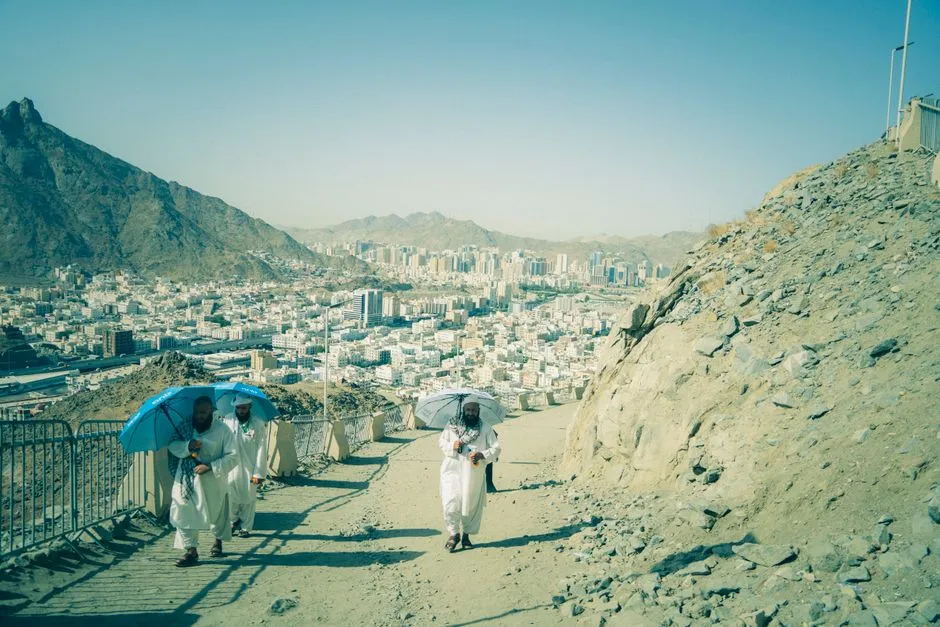
Pilgrimage is purposeful travel toward sacred meaning
Religious pilgrimage is a journey to a place regarded as sacred or spiritually significant within a particular tradition or community. It may express obligation, devotion, gratitude, repentance, remembrance, hope for healing, study, communal identity, or a desire for transformation.
That definition describes a family resemblance, not one universal ritual. Who may travel, why, when, by which route, and what happens at the destination depend on the tradition and often vary within it.
Place, journey, and practice work together
A pilgrimage site may be connected to a sacred event, person, text, object, landscape, shrine, temple, grave, vision, or community history. The route can matter as much as arrival. Walking, fasting, chanting, wearing particular clothing, traveling in a group, giving charity, circling a site, bathing, keeping silence, or carrying an offering may be meaningful in some settings.
Do not move practices between traditions as though they were interchangeable accessories. A similar outward action can have a different theology, history, authority, and purpose.
The beliefs and practices collection therefore starts with the community's own terms. Even the English word “pilgrimage” may be an imperfect translation for a more specific concept.
Obligation is not the same everywhere
For Muslims who are physically and financially able, Hajj is a prescribed pilgrimage to Mecca carried out at a particular time with defined rites. Eligibility and the rites themselves are matters of Islamic teaching, not something a general comparison should rewrite.
In Hindu traditions, sacred places of pilgrimage include temples, rivers, mountains, and other sites understood through varied regional and theological contexts. The Sanskrit term tirtha, often translated as a crossing or ford, conveys meanings that the generic phrase “holy destination” does not exhaust.
Other religious communities maintain their own pilgrimage traditions, sometimes focused on sites connected with teachers, saints, sacred histories, revelation, ancestors, or collective suffering. Within any broad label, participation may differ by movement, family, gender, location, authority, age, health, or personal conviction.
These examples should not be arranged on a scale from “most serious” to “mostly symbolic.” Comparison explains difference; it does not referee devotion.
Pilgrims can hold more than one motive
A person may undertake pilgrimage out of faith and also value companionship, landscape, heritage, or escape from routine. Another may travel because family expects it, then discover a personal meaning. Someone may approach a sacred site as a curious visitor without identifying as a pilgrim.
Mixed motives do not automatically invalidate the journey. Nor does physical hardship prove spiritual sincerity. Communities differ on preparation, intention, proper conduct, and who can interpret the practice.
Commercial travel services can support access while also raising questions about cost, crowding, labor, environmental effects, and inequality. Those questions belong beside—not instead of—the meanings participants give the journey.
Access shapes participation
Distance, disability, illness, caregiving, money, immigration status, borders, conflict, discrimination, and capacity limits can make pilgrimage difficult or impossible. Some traditions provide exemptions, alternatives, delegation, local observances, or symbolic forms of participation. Others distinguish sharply between these and the pilgrimage itself.
Do not invent a substitute for someone else's religious obligation. Appropriate religious authorities and the person's own community can explain available options. Practical access information should come from current organizers and site authorities.
Sacred sites are not empty backdrops
Pilgrimage destinations may also be homes, workplaces, archaeological sites, ecological systems, active places of worship, or spaces sacred to more than one community. Visitors should learn local rules, avoid disrupting ritual, and ask before photographing people.
Our guide to visiting a place of worship respectfully covers the basic preparation. At a pilgrimage site, add special care around processions, restricted routes, sacred water or objects, offerings, burial areas, and community-specific boundaries.
The clearest definition leaves room for particularity: pilgrimage joins movement through space with meaning recognized by a tradition, community, or participant. To understand a specific pilgrimage, follow the people who practice it past the dictionary and into their own explanations.